This Week in Psychedelics - 3.17.17

Image by Dahtamnay, courtesy of Creative Commons licensing.

Image by Dahtamnay, courtesy of Creative Commons licensing.

Cannabis

  • Surprise: Government-Grown Pot Is Total Schwag, Not Suitable for Research (Reason)
  • Marijuana could hold the key to treating Alzheimer's but drug laws stand in the way, say scientists (The Independent)
  • Jeff Sessions Says Marijuana Is Only 'Slightly Less Awful' Than Heroin. Science Says He's Wrong (TIME)
  • What Israel Can Teach Us About Medical Marijuana Policy and Research (Psychedelic Times)
  • Forgotten weed stash donated to Goodwill (CNN)
  • One Way the Marijuana Industry Can Address Racial Injustices (ATTN:)
  • What's Really Inside Your Cannabis Vape Cartridge? (Merry Jane)
  • Part 1, The History of Dutch Cannabis Coffeeshops (Leafly)
  • Oxford University to launch medical marijuana research program (CNBC)
  • USDA to Farmers: Be a Patriot! Grow Cannabis! (Reason)
  • Nevada senator proposes bill to legalize cannabis clubs and marijuana use at events (KRNV)
  • Farmers in Italy fight soil contamination with cannabis (CBS News)
  • How Much Tax Revenue Do Legal Cannabis Sales Generate? (Leafly)
  • Group Urges MA Lawmakers to Hold off on Cannabis Law Changes (Leafly)
  • Medical Marijuana Pharmacovigilance: What It Is And How To Get Involved (Psychedelic Times)
  • These Are the 10 Best and Worst States for Medical Cannabis (Leafly)
  • A Guide to Cannabis Seedling Diseases and How to Prevent Them (Merry Jane)
  • Denver FBI Honors Youth Program Partly Funded by Cannabis Taxes (Leafly)
  • Welcome to the world of luxury cannabis (Fast Company)
  • Snoop Dogg's New Video Features Cannabis, Clowns, and Trump (Leafly)
  • Cannabis Culture Dispensaries Owned By Emerys Tied To Organized Crime: Police (The Huffington Post)

LSD

  • 'Orange Sunshine' Is Coming out of the Psychedelic Closet (Leafly)
  • South Euclid man on LSD says spider gave birth in his stomach, report says (Cleveland.com)

Psilocybin/Magic Mushrooms

  • With Pot Gaining Acceptance, are "Magic Mushrooms" Next Up for Decriminalization? (Rockland County Times)
  • 'LOOK AT US' Two brothers 'on magic mushroom bender stripped naked, passionately kissed, smashed cars and punched neighbour in rampage' at US apartment block (The Sun)

MDMA/Ecstasy

  • Future of tinnitus treatment could involve illegal party drug (Stuff.co.nz)
  • Should People Facing Ecstasy Charges Get Lighter Prison Sentences? (L.A. Weekly)

Ayahuasca/DMT

  • The Universal Archetypes of Ayahuasca Dreams and Making Sense of Your Own Visions (Psychedelic Times)
  • Mother reveals heartache after son dies in Peru from psychedelic drug experience (New Zealand Herald)
  • Ayahuasca, A Cautionary Tale For Tourists Eager To Try This Shamanic Brew (IFLScience)

Synthetic Cannabinoids/Psychoactive Research Chemicals

  • Synthetic cannabis is worse than marijuana in encouraging students to try heroin and ecstasy (Daily Mail)

Dissociatives

  • Could the Club Drug Ketamine Treat Depression? (MSN)
  • PCP Smoking Bandit Who Stole $3 Million Of Drake's Jewels Is Going To Jail (All HipHop)
  • Nude man on PCP arrested (KADN)
  • Herndon Cops Chase PCP Enthusiast Through Town: Police (Herndon Patch)

Opiates/Opioids

Kratom

  • How To Make Kratom Extract At Home? (Kratom Guides)
  • American Kratom Association Urges Local Authorities To Stop Unscientific Attacks On Kratom (PR Newswire)
  • How to Quit Using Kratom? (Kratom Guides)
  • The Best Supplements and Medications for Kratom Withdrawal (Kratom Guides)

Kava

Khat

Miscellaneous Psychedelics/Psychoactives/Drug Policy

  • Three Ways Psychedelic Therapy Could Reduce Intimate Partner Violence (Psychedelic Times)
  • Philippine Vice President Slams Duterte's Drug War in a New Video (TIME)
  • Here's How Long Drugs Like Alcohol, Cocaine and LSD Stay in Your System (The Inertia)
  • The Dose Will See You Now: The Astonishing Life-Saving Potential of Psychedelic Therapy in Modern Medicine (Psychedelic Times)
  • In-depth: Psychedelic drugs being researched in Bay Area to treat mental disorders (KRON4)
  • New Federal Sentencing Data Provides a Reminder That the War on Meth Is Alive and Awful (Reason)
  • A psychedelic path (PressReader)

Disclaimer: "This Week in Psychedelics" does not censor or analyze the news links presented here. The purpose of this column is solely to catalogue how psychedelics are presented by the mass media, which includes everything from the latest scientific research to misinformation.

Book Review - kindfulness

kindfulness.jpg

I first heard of Ajahn Brahm and his book kindfulness at my local Buddhist center, the Kadampa Center, during one of the Buddhist classes that I was taking last year. I wrote down the name of the book because it was given a very strong recommendation by a few people, and decided to give it a read this week.

Ajahn Brahm is a British Buddhist monk in the Theravada tradition who serves as the Abbot of the Bodhinyana Monastery in Australia. He also holds many other positions in various places around the world and has accomplished many hard-earned achievements. He is quite qualified to write a book on the topic of kindfulness, which seems to be a term that he created which focuses on generating relaxation in order to bring ease to the body, mind, and world and facilitate healing.

The first half of the book focuses on five simple stages to begin or deepen one's meditation practice. The first stage focuses on giving up the baggage of the past and future by showing no interest in your past or future experiences at all.

"Some people think that if they contemplate the past, they can somehow learn from it and solve their problems. But when we gaze at the past we invariably look through a distorted lens. Whatever we think it was like, in truth it was not quite like that at all! This is why people argue about what happened even a few moments ago."

"As for the future – the anticipations, fears, plans, and expectations – let that go too. The Buddha once said, 'Whatever you think the future will be, it will always be something different.' This future is known by the wise as uncertain, unknown, and unpredictable. It is often useless to anticipate the future, and in meditation it is always a great waste of time. You cannot know the future. It can be so strange, so weird, so completely beyond what you would expect."

The second stage involves developing present-moment awareness, which requires an ability to conjure silent awareness in the present moment. Brahm suggests that instead of being silently aware of every thought or feeling that arises, we should choose silent present-moment awareness of just one thing. He, along with many other teachers I have studied, advises starting with a silent present-moment awareness of the breath.

"When you are noting or making a comment about an experience that has just passed, you are not paying attention to the experience that has just arrived. You are dealing with old visitors and neglecting the new arrivals."

The above concept is contrary to meditation instructions that I have received from the Headspace meditation app, which advises practicing a technique called "noting" each thought and emotion that arises before letting it fade away. (As a side note, I actually no longer use Headspace—I found silent meditation [with a focus on silent present-moment awareness, of course!] to be much more productive for me than the guided meditation style. However, I would advise brand-new meditators to give Headspace a try, since it is more geared toward absolute beginners than intermediate and advanced meditators.)

The third stage of this meditation practice is a sustained attention on the breath. One common problem that comes up at this stage is a tendency for one to control the breathing, which makes the breathing uncomfortable. Brahm suggests taking a step back and imagine that the practitioner is just a passenger in a car looking through the window at their breath—they are not the driver, nor a backseat driver.

The fourth stage occurs when the practitioner's attention expands to take in every single moment of the breath. This degree of stillness can only emerge when one lets go of everything in the entire universe except for the experience of breathing silently.

The fifth stage is called "full sustained attention on the beautiful breath", and it often flows naturally and seamlessly from the previous stage. It is simply a matter of the mind recognizing the beautiful breath and rejoicing in it. This facilitates a deepening of contentment.

The second half of the book describes practices to develop kindful loving and letting be and working with obstacles to kindfulness. The first set of practices involves a type of compassion meditation that is sparked by generating kindfulness for a helpless, suffering being—Brahm uses the example of a struggling kitten—and then expanding that feeling to other beings until it is extended to all sentient beings. The passage on working with obstacles covers topics like restlessness, being kind to oneself, anger, and negative mind states. The following quote helped me understand my own proclivity to attach to anger in certain situations:

"There is an addictive and powerful pleasure associated with the expression of anger. And we don't want to let go of what we enjoy. However, there is also a danger in anger, a consequence that outweighs any pleasure. If we would keep in mind the danger, then we would be willing to let anger go."

The book closes with a summary of the previous chapters' advice and encouragement to continue practicing kindfulness for the benefit oneself and of all sentient beings.

Overall, I really enjoyed this book. I wasn't sure what to expect before reading it, but I found it to be one of the better dharma books that I have read in the past few years. The advice is easy to understand because of Brahm's clear, concise writing style. I would definitely recommend this book to others, regardless of their previous experience with meditation or the concept of mindfulness.

4/5 stars. 184 pages.

Weekend Thoughts - 3.11.17

Image by Andrea Kirkby, courtesy of Creative Commons licensing.

Image by Andrea Kirkby, courtesy of Creative Commons licensing.

Happy Saturday y'all! Below, I have rounded up some things for you to think about this weekend:

1. Possibly the biggest news this week (as far as Think Wilder readers would be concerned) was WikiLeaks' publication of CIA hacking secrets, titled "Vault 7". The release contains 8,761 documents and represents "the majority of [the CIA] hacking arsenal including malware, viruses, trojans, weaponized 'zero day' exploits, malware remote control systems and associated documentation," according to WikiLeaks. Among the most interesting to U.S. citizens are vulnerabilities found in the iOS, Android, and Windows operating systems, methods to compromise end-to-end encrypted chat applications, and the ability to turn Samsung smart TVs into listening devices. From my understanding, most of these exploits require the CIA to have physical access to a device, not that the encryptions themselves were broken. It's worth taking a look to familiarize yourself with how the agency has been carrying out its operations so far, and what its capabilities are when it comes to spying on people using technological means.

2. The situation at the U.S. border has gotten more complex over the past several weeks. A new development in that story occurred this week when Border Patrol started increasing their demands for passwords and searching private electronic devices. And it turns out that they're legally allowed to do so. When traveling inside the U.S. border, the TSA is not allowed to confiscate devices or ask for passwords, because citizens are protected by the Fourth and Fifth amendments. But since Border Patrol is not technically located inside of the border, those protections do not necessarily apply. For now, Border Patrol is operating inside of a grey area, unimpeded by our rights against unreasonable searches and self-incrimination. If you're interested in protecting yourself as much as possible when traveling abroad-and-back, I suggest taking a look at the Electronic Frontier Foundation's "Pocket Guide To Protecting Your Data".

3. In interesting nutrition-related news, new research shows that there was no such thing as a "typical Neanderthal diet"—some Neanderthals ate meat, and others were strict vegetarians. This development throws some shade on the so-called "Paleo Diet", which may be more accurately represented as a "no-carb diet", because the true Paleo Diet consisted of whatever was available in one's environment. Essentially, the findings represent a more adaptive type of being:

"Those that occupied southern regions with relatively warm climates, consumed different types of foods, including meat and vegetables," says Luca Fiorenza from Monash University (not involved with the study). "But Neanderthals that lived in very harsh conditions, such as northern Europe, were forced to rely on the limited sources available—meat."

It's nice to know that the scientific findings back up the conviction that I always held, which was that our ancestors just ate whatever was around so that they could continue surviving—not that they were strict carnivores or strict vegans.

4. I'm a huge fan of the Instant Pot, which is a combination slow-cooker, pressure cooker, rice cooker, and more. I use it nearly every day to batch cook recipes, and find the device easy to use, easy to clean, and a massive time-saver. The BBC wrote a feature story on the success of the Instant Pot and how it developed a cult following that is worth a read. And if you're interested in purchasing one, I definitely advise it! I might suggest waiting until this year's Amazon Prime Day (if you are an Amazon Prime customer) because they were sold at a nice discount during last year's Prime Day event.

5. As a regular book reader, I especially enjoyed this article showing 10 reasons why reading is important. The various benefits include sharpening your mind, lowering stress levels, increasing your vocabulary, enhancing your imagination, and boosting your sleep—among many others! So if you needed any reasons to increase your reading time, look no further!

That's all for this week's edition of Weekend Thoughts. Until next week, keep thinking wilder.

This Week in Psychedelics - 3.10.17

Image by Dahtamnay, courtesy of Creative Commons licensing.

Image by Dahtamnay, courtesy of Creative Commons licensing.

Cannabis

  • Israel makes it official: Cannabis is not a crime (CNN)
  • George Rohrbacher: Trump Administration Plans To Ramp Up Government Regulation and Stifle New Marijuana Businesses (NORML)
  • Why Trump Could Be Good For The Cannabis Industry (Forbes)
  • The US government grants cannabis patents even though weed is illegal (Quartz)
  • Make drugs dull: legalising cannabis the Canadian way (The Spectator)
  • Does Cannabis Use Lower Your IQ? (Leafly)
  • Pennsylvania Auditor Wants to Close Budget Gap by Legalizing Marijuana (TIME)
  • Cannabis boosts risk of stroke and heart attack, independent of tobacco, new study finds (The Telegraph)
  • A "cannabis gym" is opening in San Francisco (A.V. Club)
  • Pot for pets: Owners treat sick animals with cannabis (ABC News)
  • Dancing but no dank: fed threat means toned-down Cannabis Cup (The Cannabist)
  • Epilepsy patients turning to medicinal cannabis, survey shows (The Guardian)
  • Growing Hemp Legally in Kentucky (Reason)
  • Where to Find the Best Legal Cannabis Lounges (Leafly)

LSD

  • LSD doesn't just treat mental illness, 'it could actually heal the brain' (WIRED)
  • LSD 'microdosing' is trending in Silicon Valley – but can it make you more creative? (The Memo)

Psilocybin/Magic Mushrooms

  • The Psilocybin Solution: The Role of Sacred Mushrooms in the Quest for Meaning (Serge De Vrindt)

MDMA/Ecstasy

  • MDMA Overdose Prevention Drug to be Available at all Insomniac Events (EDM Chicago)
  • Local therapists' success treating PTSD with psychedelic drug puts FDA a step closer to approving it (Charleston Post Courier)
  • Chemical used to make MDMA dumped in Surrey pond (The Now)
  • Four schoolgirls aged 13 taken to hospital after 'taking teddy bear ecstasy pills' (The Sun)
  • Colchester student died after taking MDMA on night out (Essex Live)
  • Jordan Duffy fined for supplying MDMA before death of girlfriend Janie Roberts (Bellingen Courier Sun)

Ayahuasca/DMT

Salvia Divinorum

Synthetic Cannabinoids/Psychoactive Research Chemicals

  • After Alex 'N Bomb' tragedy, drug education can prevent more deaths (Irish Independent)

Dissociatives

  • Can Ketamine Be Used For Treatment Resistant Depression? (Delray Newspaper)
  • Ketamine no 'wonder drug' for depression (Medical Xpress)
  • Cops say man high on PCP pointed cellphone at drivers like a gun (NJ.com)

Opiates/Opioids

  • NYC Area Heroin Epidemic Is Worst In Years If Not Ever, DEA Says (CBS New York)
  • America's heroin epidemic starts in Mexico (The Spokesman-Review)
  • Durham police will give addicts heroin to inject in 'shooting galleries' (The Guardian)
  • CVS to dispense naloxone prescription-free in four more states (Drug Store News)
  • Dozens accused of dealing fentanyl-laced heroin on Chicago's West Side (Chicago Tribune)
  • Surge in opium cultivation posing threat to security (Himalayan Times)
  • This Community's New Plan to Fight the Opioid Epidemic Started a Debate About Criminal Justice (ATTN:)
  • Mysteries at the Museum: The Elixir of Opium (Jacksonville Daily Progress)

Absinthe

  • 5 Things You Should Know About Absinthe (Paste)

Kratom

  • Kratom: Is the US trying to ban a drug helping heroin addicts beat their habit? (The Independent)
  • How to Make Kratom Tea From Crushed Leaves? (Kratom Guides)
  • Which Kratom is Best for Sleep and Insomnia? (Kratom Guides)

Kava

Khat

  • East African khat leaf is traded and chewed mostly by men, but it's a global business because of women (Quartz)

Miscellaneous Psychedelics/Psychoactives/Drug Policy

  • What If Psychedelic Therapy Was Required to Enter Public Service? (Psychedelic Times)
  • What Psychedelics Really Do to Your Brain (Rolling Stone)
  • Psychedelic Science 2017: Interview with MAPS Communications Director Brad Burge (Psychedelic Times)
  • Why Jeff Sessions Is Worrying Drug Policy Experts (ATTN:)
  • Integrating a Psychedelic Experience: Two Meditations to Ease Anxiety and Prevent Panic Attacks (Psychedelic Times)
  • Horrors of Duterte's Drug War Exposed in New National Geographic Film (TIME)
  • Tobacco or No Tobacco? Choosing the Right Rapé Snuff Blend for Your Ceremony (Psychedelic Times)
  • 7 myths about psychedelic drugs like LSD that are doing more harm than good (Business Insider)
  • From College Dropout To Shaman Apprentice: A Story of Becoming A Leader Of The Secoya And Protecting The Vanishing Amazon (High Existence)
  • In a Traumatised World, is Psychedelic Therapy our Best Hope? (Mad in America)
  • Tim Ferriss on suffering, psychedelics, and spirituality (Vox)
  • Bolivia Doubles Area Allowed for the Legal Planting of Coca (TIME)

Disclaimer: "This Week in Psychedelics" does not censor or analyze the news links presented here. The purpose of this column is solely to catalogue how psychedelics are presented by the mass media, which includes everything from the latest scientific research to misinformation.

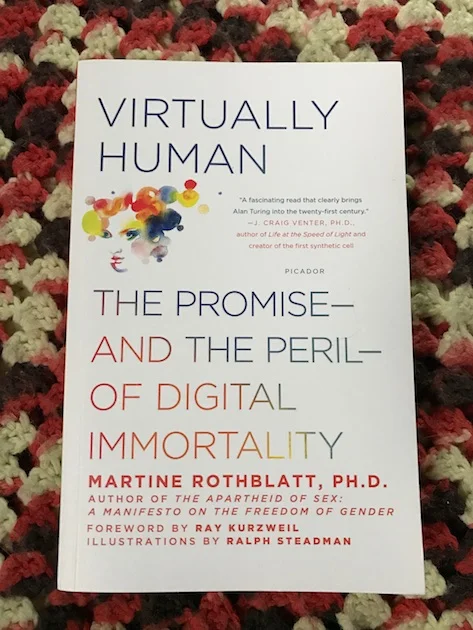
Book Review - Virtually Human

VirtuallyHuman.jpg

The times they are a-changin'. Advances in technology have brought us the Internet, smartphones, the sharing economy, cryptocurrencies, and automation. Every day, people all around the world are uploading their thoughts, memories, preferences, beliefs, and history to social media websites, essentially creating "mindfiles" of themselves. Software engineers across the globe are working to create "mindware" that will combine this mindfile data with humanlike consciousnesses in computer software to create "cyberconsciousness". Within the next few decades, the combination of mindfiles and mindware will result in something called "mindclones", which will essentially be an extension of our own human consciousnesses. That is the premise of Virtually Human: The Promise—and the Peril—of Digital Immortality, and Martine Rothblatt goes into great detail about the societal implications of this technological innovation.

This is the sort of book that needs to be read multiple times to fully comprehend. I would definitely recommend it to others, but would caution them that it can be a bit slow to get into. For the first third of the book, I just wasn't hooked. But things definitely picked up and I became really interested in the discussion. It seems like Rothblatt has a deep understanding of where things are headed in the future, especially when it comes to artificial intelligence. Her arguments are well thought-out and thoroughly-researched, and definitely worth considering. If you have any interest in the concept of extending our consciousness past physical bodies and into the realm of computers, this is a must read.

4/5 stars. 350 pages.