Book Review - On Cats

OnCats.jpg

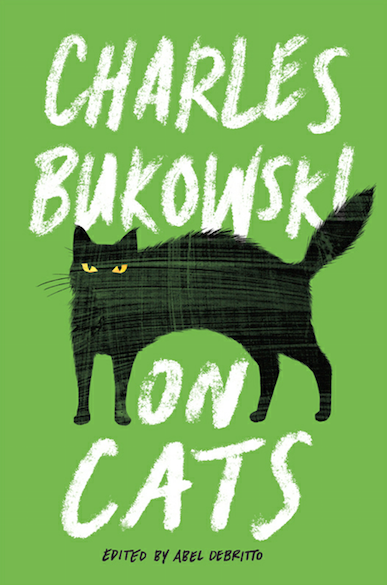
On Cats is a collection of short stories and poems written by German-American author Charles Bukowski, all of which have something to do with cats. Although Bukowski is often regarded as tough and gnarly, he considered cats to be special creatures—something that I can certainly relate to as well.

The cats featured in this book are amusing, touching, resilient, and much more. As Bukowski puts it, "The cat is the beautiful devil." He pays tribute to their abilities as predatory hunters, street-smart scrappers, and resourceful survivors, as well as their positive qualities like providing affection and care for their owners. However, this is not exclusively a cutesy book about cats. The cats featured in this book are shown sneakily stalking their prey, stabbing their claws into Bukowski's typewritten pages as they walk across his work, and defending themselves viciously against the other neighborhood cats.

This was the first book that I've read of Bukowski's, and I very much enjoyed it. It's a quick read (it only took me a few days to complete) and it's about my favorite domestic animal. I especially appreciated how similar his cats were to his own personality, almost as if they had attracted each other with a strong magnet. If you appreciate cats (or even if you don't—Bukowski's cats run the full gamut of lovable all the way to loathsome) then you should check this one out.

4/5 stars. 128 pages.

Weekend Thoughts - 9.30.17

Image by Frank Lindecke, courtesy of Creative Commons licensing.

Image by Frank Lindecke, courtesy of Creative Commons licensing.

Happy Saturday y'all! Below, I have rounded up some things for you to think about this weekend:

1. Moscow's local authorities are upgrading the city's massive CCTV network of security cameras with facial recognition technology to assist police with identifying criminal activity on the streets. A collection of 170,000 security cameras have already been monitoring the city and recording millions of hours of video since 2012. During a six-month test run of the new system, the cops were reportedly able to catch six suspects that would've presumably evaded capture without the assistance of the new technology. There are privacy concerns with facial recognition technology—just think about what would happen if the system is infiltrated by third-parties who use the information to know where Moscow's citizens live, work, and the specific routes that they normally take. And it's worth mentioning that the city cannot afford to upgrade all of its security cameras at this time—the plan is to upgrade the ones that are located in areas that have the greatest need. It would be wise to anticipate the eventual spread of facial recognition technology to other locations in the future.

2. I'm a pretty big fan of efficient, inexpensive public transportation, which is why I enjoyed this analysis of why public transportation sucks in the United States. Strap in for a short history of the streetcar, bus, and personal automobile.

3. Here's an entertaining video clip of Robert Anton Wilson calling Donald Trump "fucking crazy" from back in the day.

That's all for this week's edition of Weekend Thoughts. Until next week, keep thinking wilder.

This Week in Psychedelics - 9.29.17

Image by Dahtamnay, courtesy of Creative Commons licensing.

Image by Dahtamnay, courtesy of Creative Commons licensing.

Cannabis

  • More people were arrested last year over pot than for murder, rape, aggravated assault and robbery – combined (The Washington Post)
  • Trump Extends Cannabis Protections 'Til December As Plans For Study, States Remain Hazy (Forbes)
  • Marijuana Arrest Data Absent From Latest FBI Uniform Crime Report (NORML)
  • Massachusetts High Court: Field Sobriety Tests Are Not Valid Measures For Determining Marijuana-Induced Impairment (NORML)
  • Cannabis as a Spiritual Tool: Interview with Author Stephen Gray (Psychedelic Times)
  • Pot Busts Rose Last Year After Hitting a Two-Decade Low in 2015 (Reason)
  • College Medical Marijuana Policy Leaves Many Students Unable to Legally Consume (NORML)
  • People Are Successfully Replacing Vicodin, Xanax and Ambien With Marijuana (ATTN:)
  • Jeff Sessions Just Made the Head of the DEA Look Like a Pot Head's Hero (Reason)
  • Washington State Releases Update On Legalization Findings—High Hopes Are Rewarded (NORML)
  • 'Hello! Thanks for Visiting Maine. May I Take Your Cannabis Order?' (Leafly)
  • Cannabis-infused drama 'Woodshock' mired in moody death spiral (Los Angeles Times)
  • Bogus Stoned Driving Arrests Highlight Dubious Methods of 'Drug Recognition Experts' (Reason)
  • Cannabis smokers 'incapable of walking' rescued from England's highest mountain (The Telegraph)
  • Philippines Health Committee Passes Medical Cannabis Bill (Leafly)
  • Muchas Gracias: How Spain Brought Cannabis to the Americas and influenced Hispanic Culture (Leafly)
  • Snoop Dogg's venture capital firm is leading an investment in a cannabis tech company (Business Insider)
  • California Cannabis Retail Market Revealed: Big Data Tells All (Forbes)
  • The Wellness Soldier: How War and Cannabis Created a Canadian Force for Good (Leafly)
  • Cannabis dealers in the UK are 'prescribing' weed to treat illnesses (Metro)
  • City Council Considers Cutting Off LA's Cannabis Supply Chain (Leafly)
  • Getting Too Drunk Vs. Getting Too High (ATTN:)
  • Study: McDonald's Is A Big Hit With Cannabis Smokers (Forbes)
  • Wanna Grow Your Own Cannabis? Start With Tin House's New Cannabis Grow Guide (The Potlander)
  • San Jacinto agrees to grant up to 10 more pot business licenses (The Press-Enterprise)
  • By Excluding LGBTQ People, the Growing Cannabis Industry Is Betraying Its Roots (Slate)
  • Cannabis Crunch – Universities Waffle on Marijuana Research; Iceland, Peru Look To Legalize (Psychedelic Times)
  • Stanislaus County could limit marijuana outlets. 'Green fees' also proposed. (The Modesto Bee)

LSD

  • Can an LSD Overdose Kill You? (Big Think)
  • 'Suicide headaches' drive patients to try LSD and magic mushrooms to stop the pain (International Business Times)
  • Coroner no longer naming LSD as only cause of Lightning in a Bottle death (Paso Robles Daily News)
  • How The Natural Hallucinatory Effects of Ergotism Influenced Renaissance Artists Like Hieronymus Bosch (Inquisitr)
  • Hilarious footage captures the antics of Royal Marine commandos who were secretly given LSD and then fell about in fits of laughter when they were given orders (Daily Mail)

Psilocybin/Magic Mushrooms

  • Hallucinogenic mushrooms found a new use (The Siver Times)
  • From "Shrooms" to CalExit: California Could Have a Wild 2018 Ballot (IVN News)
  • Berkeley police seize $1 million worth of 'magic' mushrooms (San Mateo Daily Journal)
  • Heidi Klum's Ex Busted for Shrooms at Burning Man (Yes, That's Illegal There) (TMZ)

MDMA/Ecstasy

  • Santa Cruz-based MDMA therapy for PTSD reaches final testing phase (Santa Cruz Sentinel)
  • The Killers talk doing MDMA at a Deadmau5 show (NME)
  • Mystery Artist Chemical X & An "Unnamed Supermodel" Unveil Ecstasy-Filled Artwork (Highsnobiety)
  • Deaths related to cocaine and MDMA more than doubles in Ireland over a five-year period (The Irish Sun)
  • Parents alerted over batch of ecstasy circulating among school kids in Fife as cops detain man (The Scottish Sun)

Ayahuasca/DMT

  • Psychedelic brew called ayahuasca shows promise in the treatment of eating disorders (PsyPost)
  • Could psychedelic drug ayahuasca have health benefits? (BBC)

Peyote/San Pedro/Mescaline

Dissociatives

  • Ketamine-Induced Glutamatergic Mechanisms of Sleep and Wakefulness (Springer)
  • Efficacy of intravenous tramadol and low-dose ketamine in the prevention of post-spinal anesthesia shivering following cesarean section: a double-blinded, randomized control trial (Dove Medical Press)
  • Man with 'I love ketamine' bumper sticker is pulled over... and busted for ketamine (Metro)

Opiates/Opioids

  • This App Tracks Opioid Overdoses in Real-Time All Over the US (Futurism)
  • No, Simply Touching Fentanyl Can't Kill You (Reason)
  • How British scientists are fighting the US heroin crisis (The Times)
  • Vancouver overdoses taking longer, more naloxone to reverse (News1130)
  • A Chinese Lesbian Warlord Used CIA Funding to Traffic Opium in Myanmar (War Is Boring)
  • Mugshots reveal staggering transformation of heroin addict's face in the space of just two years (Mirror)
  • U of S security officers add naloxone kits to tool belts (CBC News)
  • To prevent OD deaths, Philly to give out naloxone as people leave jail (Newsworks)

Absinthe

  • WATCH: Irish people taste testing absinthe for the first time will make you laugh (Irish Mirror)

Kratom

  • Using Kratom And Other Healing Herbs To Beat Insomnia (Kratom Guides)
  • Exclusive: Hillsborough confirms first ever death by herbal supplement Kratom in the county (WFTS)

Kava

  • We tried kava – the national drink of Fiji that gets people high (Business Insider)

Khat

  • Man arrested at Zurich Airport with two suitcases of East African drug (The Local)

Miscellaneous Psychedelics/Psychoactives/Drug Policy

  • Dismayed by Trump, Head of Drug Enforcement Administration to Leave (The New York Times)
  • When Drugs Fuck You Up Forever (VICE)
  • How to Win a War on Drugs (The New York Times)
  • Psychedelic Podcasts That Will Stimulate Your Ears and Your Brain (Psychedelic Times)
  • Quantifying Drug Use With Sewage and Cell Phones (Discover Magazine)
  • The Political Correction of Psychedelics. Part 3. Psychedelics as Super-Placebos (RickStrassman.com)
  • 'Robust public funding' needed for psychedelic drug research say researchers (CBC News)
  • What the Scientologists can teach us about drug reform (Psymposia)
  • The visionary conference that is about to happen in Prague (Political Critique)
  • Breathe. Breathe. Breathe. An Interview with Iker Puente on Holotropic Breathwork (Psymposia)
  • Will Psychedelic Therapy Transform Mental Health Care? (NBC News)
  • Jhené Aiko Narrates Her Psychedelic 'Trip' Through Death, Love And Reawakening (NPR)
  • Can Hallucinogens Have You Seeing Dollar Signs? Attend 'The Psychedelics of Money' to Find Out (Bedford + Bowery)
  • Psychedelic Drugs in Biomedicine (Cell Press)
  • Meth-Laced 7Up Reportedly Found in Mexico (Snopes)

Disclaimer: "This Week in Psychedelics" does not censor or analyze the news links presented here. The purpose of this column is solely to catalogue how psychedelics are presented by the mass media, which includes everything from the latest scientific research to misinformation.

Book Review - Do Androids Dream of Electric Sheep?

DoAndroidsDreamOfElectricSheep.jpg

You may know of this book because of its popular 1982 film adaptation, Blade Runner. However, if you're unfamiliar with it then you should know that Do Androids Dream of Electric Sheep? is the most well-known and critically-acclaimed of Philip K. Dick's novels. It's a classic science fiction piece that was first published in 1968. Set in post-apocalyptic San Francisco, lifeforms on Earth have been severely impacted by a global nuclear conflict, dubbed "World War Terminus". Unfortunately, most animal species are either endangered or completely extinct due to ongoing radiation poisoning from the fallout of the war. Therefore, owning an animal has become a status symbol that indicates one's position in life as well as a signaling to others of one's empathy toward animals, which is highly revered by the remaining human population. Only the wealthy can afford real animals—the poor have to resort to purchasing artificial (yet realistic-looking) electric animals.

The main plot follows our protagonist Rick Deckard, a bounty hunter who is tasked with killing ("retiring") six androids who have escaped from Mars. These fugitive androids are the brand-new Nexus-6 model, which were recently made illegal on Earth because they went violently rogue while off-world. A subplot follows John Isidore, who possesses a low IQ and is therefore sentenced to live the rest of his lonely life on Earth while more intelligent people are allowed to emigrate to the off-world colonies. Isidore finds a much-needed sense of community with the androids and decides to help them evade their pending retirement. The novel explores the concept of what it is to be human, contrasting that experience with androids who are unable to feel empathy toward others.

The overall story is captivating and entertaining, the characters are fully-baked with believable personalities, and the overall atmosphere is tinged with just the right amount of darkness, paranoia, and confusion. Absent from this book—yet common in PKD's novels—is the use of psychoactive drugs. However, a device called the "Penfield mood organ" is capable of inducing any feeling or emotion in the user such as "a fresh attitude towards one's job", "the desire to watch television, no matter what is on" or "self-accusatory depression". This device is only mentioned in the beginning of the book, but it serves as a worthy replacement for the psychoactive drugs that normally accompany a PKD story.

This was my second reading of this book; I listened to the audiobook version this time around. And I also watched the film Blade Runner recently, so that was fresh in my mind during this reading. The first time I read this book (which was more than ten years ago), I was impressed but admittedly a bit lost and confused. Even though I didn't fully "get it" at the time, I knew that it was considered to be one of PKD's finest books so I ended up rating it with 4/5 stars at that time. However, having a better understanding of the plot this time, I feel that it is worth the full 5 stars. Not only that—I can tell that I'll be re-reading this book over and over again for the rest of my life. That's because even after this most recent reading, I know that I glossed over a fair amount of the story—leaving plenty more in store for when I return. I'd definitely recommend this book to science fiction fans and general fiction fans alike. If you're first getting into PKD, you can't go wrong with this book. And if you're looking for more after you finish this one, you should check out The Man in the High Castle, A Scanner DarklyUbik, and my personal favorite—The Three Stigmata of Palmer Eldritch. Bon voyage, my friends.

5/5 stars. 244 pages.

Book Review - The Art of Happiness

TheArtOfHappiness.jpg

Having been a student of Mahayana Buddhism for the past couple years, I had been meaning to read a book by the fourteenth Dalai Lama, and was overjoyed to purchase this one after being alerted that the Kindle edition had gone on sale by the excellent ebook deal-alerting service Bookbub. Since it was the first book by the current Dalai Lama that I ever read, I wasn't sure what to expect but I did expect it to be of high quality—especially since it is his most well-known book. Fortunately, it did not disappoint me in the slightest!

The Art of Happiness: A Handbook for Living was co-authored by psychiatrist Howard Cutler, who posed questions to the Dalai Lama over the series of many interviews. Cutler provides the setting and context for their meetings and also incorporates his own reflections on the issues raised in their discussions. In addition, transcriptions from several of the Dalai Lama's teachings are scattered throughout the book. It was first published in 1998, and I read the ten-year anniversary edition that was published in 2008 which includes a new preface and introduction.

The book delves into the concept of using various techniques to train the mind in order to achieve true happiness. In the preface, His Holiness the Dalai Lama states, "If you want others to be happy practice compassion; and if you want yourself to be happy practice compassion." This focus on developing compassion is consistent throughout the book and is a main focus in many of the answers that the Dalai Lama gives to Cutler's questions. It seems that this is a sort of prerequisite for cultivating happiness, a foundation upon which all of the other advice is based upon.

Another point that is made time and time again is that happiness comes down to one's state of mind more than by external events. There are a plethora of examples provided in the book, such as how lottery winners do not sustain their initial delight over a longterm period and instead return to the level of moment-to-moment happiness they were accustomed to prior to winning the lottery. Or how studies have shown that people who are struck by tragic events like cancer and blindness typically recover to their normal level of happiness after a reasonable adjustment period. Psychologists label this process "adaptation", which simply refers to the tendency of one's overall level of happiness to migrate back to a certain baseline.

From a Buddhist perspective, the root causes of all suffering are ignorance, craving, and hatred. The book fleshes out this idea and suggests methods for one to overcome them. For example, the Dalai Lama advises, "We cannot overcome anger and hatred simply by suppressing them. We need to actively cultivate the antidotes to hatred: patience and tolerance."

Overall, I was very impressed by this book. When I first started reading it I wished that the Dalai Lama had been the sole author, however I eventually grew to appreciate Cutler's additions. That's mainly because I did not realize that the book was co-authored until after I started reading it, so I had unknowingly and unintentionally set an improper expectation for myself. However, by the end of the book I had overlooked the co-authoring aspect entirely and focused more on the book's content, which is excellent. I would advise this book to anyone who is interested in the Dalai Lama, Buddhism, mindfulness, or becoming truly happy.

Namaste.

5/5 stars. 348 pages.